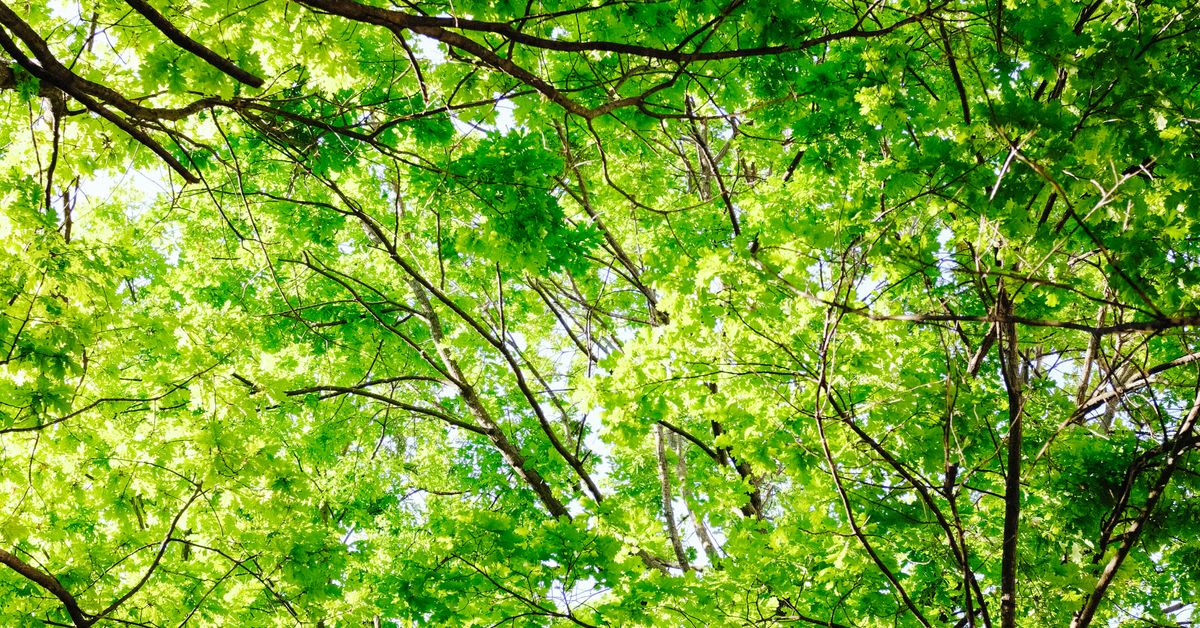
India’s total forest and tree cover spans 827,357 square kilometres, covering 25.17% of the country’s geographical area, according to the most recent India State of Forest Report. Chhattisgarh, Uttar Pradesh, Odisha, and Rajasthan showed the largest increases in combined forest and tree cover, while Mizoram, Gujarat, and Odisha led in pure forest cover growth.
India’s Current Forest Cover, By the Numbers
The India State of Forest Report, published biennially by the Forest Survey of India, found that total forest cover increased by 1,445 square kilometres compared to the previous assessment. India’s carbon stock from forests has reached 30.43 billion tonnes of CO2 equivalent, meaning the country has already achieved 2.29 billion tonnes of additional carbon sink against a national target of 2.5 to 3.0 billion tonnes by 2030. Consequently, India remains on a broadly positive trajectory toward its forest-based carbon sequestration goals, though the pace of progress varies significantly by region and forest type.
Which States Are Driving Reforestation Gains
Chhattisgarh, Uttar Pradesh, Odisha, and Rajasthan recorded the largest increases in combined forest and tree cover, reflecting a mix of state-led afforestation drives, agroforestry expansion, and improved monitoring methodology. When measured by pure forest cover alone, excluding scattered tree cover outside designated forest areas, Mizoram, Gujarat, and Odisha showed the strongest growth. Additionally, “very dense” forest cover, the category representing the healthiest and most ecologically valuable forest ecosystems, increased by approximately 22% over the preceding decade, suggesting that conservation efforts are improving forest quality and not just total area.
How Reforestation Science Has Evolved
Modern Indian reforestation programs increasingly rely on native species selection rather than fast-growing monoculture plantations, since ecological research has shown that mixed native-species forests support greater biodiversity and long-term soil health than single-species plantations. Additionally, satellite monitoring and remote sensing technology now allow the Forest Survey of India to track forest health and density changes with far greater precision than earlier ground-survey-only methods, enabling more targeted conservation interventions in degrading forest patches. Community-managed forestry programs, where local populations receive rights and responsibilities over nearby forest resources, have also expanded, reflecting research showing that community stewardship often achieves better long-term conservation outcomes than purely top-down management.
Persistent Challenges in Forest Conservation
Despite overall gains, forest degradation from mining, infrastructure expansion, and agricultural encroachment continues in specific regions, particularly in central Indian states with significant mineral reserves beneath forested land. Furthermore, climate change itself is altering forest composition in some areas, with rising temperatures and shifting rainfall patterns stressing certain native species and creating openings for invasive species to establish themselves. Therefore, total forest cover figures, while broadly encouraging, can mask more complex regional dynamics where genuine ecological gains in some states coexist with continued degradation pressure in others.
What Individuals Can Do to Support Forest Conservation
Beyond large-scale government and corporate afforestation programs, individual actions like supporting verified tree-planting organizations, reducing paper and wood product waste, and choosing sustainably certified wood products all contribute to reducing pressure on India’s remaining forest ecosystems. To understand how forest conservation connects to broader environmental efforts, see our guide on organic farming principles, which reduces agricultural pressure on forest land, and check your own environmental impact using the Carbon Footprint Calculator. Browse more articles in the Green Living Guide category.
How Forest Data Informs Climate Policy
India’s forest carbon stock figures feed directly into the country’s Nationally Determined Contributions under international climate agreements, meaning accurate, regularly updated forest survey data plays a direct role in demonstrating progress toward global climate commitments. Consequently, the biennial State of Forest Report is not merely a scientific inventory but a policy-relevant document that shapes how India reports its climate progress internationally and allocates conservation funding domestically. As remote sensing and monitoring technology continue to improve, future assessments are expected to offer even more granular, near-real-time insight into forest health trends across India’s diverse ecological regions.
Frequently Asked Questions
What percentage of India is covered by forest?
India’s total forest and tree cover spans 827,357 square kilometres, covering 25.17% of the country’s total geographical area, according to the most recent State of Forest Report.
Which Indian states have shown the most reforestation progress?
Chhattisgarh, Uttar Pradesh, Odisha, and Rajasthan led in combined forest and tree cover growth, while Mizoram, Gujarat, and Odisha led in pure forest cover increases.
Is India on track to meet its forest carbon sink target?
India has achieved 2.29 billion tonnes of additional carbon sink against a target of 2.5 to 3.0 billion tonnes by 2030, putting it on a broadly positive trajectory.
What is “very dense” forest cover?
It refers to the healthiest, most ecologically valuable forest category, which increased by approximately 22% over the preceding decade in India.
What are the main threats to India’s forests today?
Mining, infrastructure expansion, agricultural encroachment, and climate-driven shifts in temperature and rainfall patterns continue to pressure forest ecosystems in specific regions.
Sources and further reading: Ministry of Environment, Forest and Climate Change | Forest Survey of India