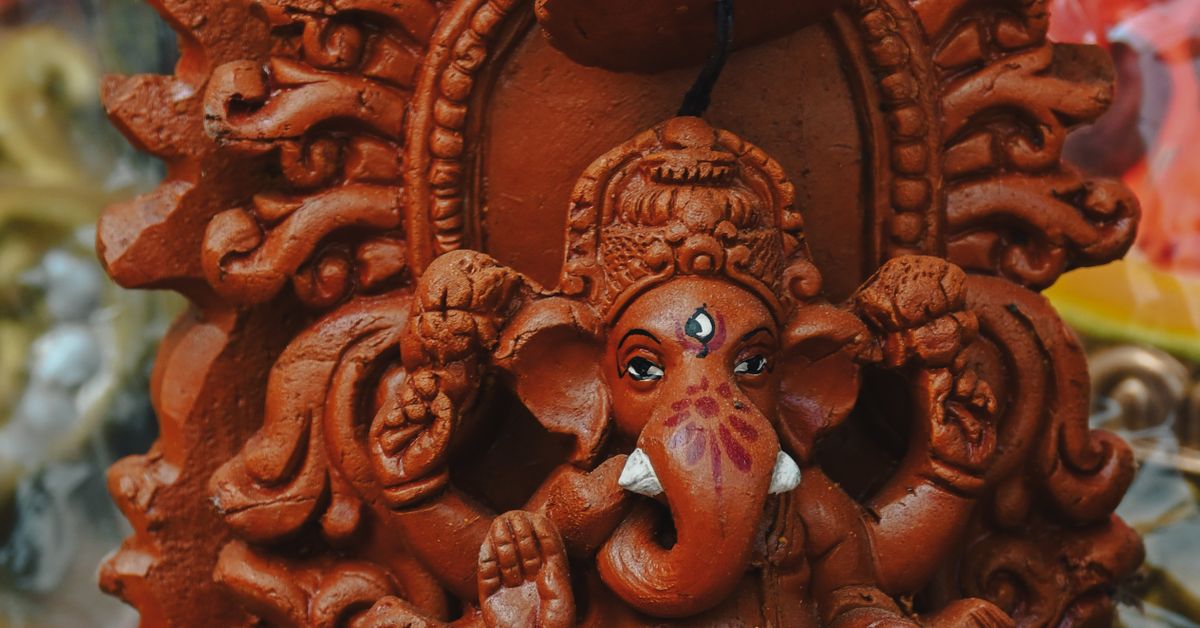
Eco-friendly Ganesh idols are made from natural, biodegradable materials like clay, terracotta, or shadu soil instead of Plaster of Paris, and decorated with organic colours instead of chemical paints. With Ganesh Chaturthi 2026 falling on September 14, choosing a genuinely eco-friendly idol matters more than ever, since several states now legally restrict PoP idols and mandate designated immersion methods.
Why Eco-Friendly Ganesh Idols Matter This Year
Plaster of Paris idols do not dissolve naturally in water. Instead, they break into fragments and release gypsum along with the chemical paints used to decorate them, contaminating lakes, rivers, and coastal water during mass immersion season. Consequently, several municipal bodies have moved to enforce stricter rules this year: only eco-friendly idols made from natural clay are permitted in many jurisdictions, and the manufacture, storage, sale, and immersion of PoP or chemically treated idols is prohibited in several cities. Choosing clay over PoP is no longer just an environmental preference; in many places it is now a legal requirement.
Clay vs Plaster of Paris: What the Rules Actually Say
Guidelines from pollution control boards specify those idols must be made from natural clay rather than Plaster of Paris or other non-biodegradable materials, and decorated only with biodegradable, organic colours such as chandan, turmeric, and gerua. Chemical paints, single-use plastic decorations, and thermocol are prohibited under these guidelines. Additionally, courts in some states have made it compulsory for idols up to six feet, regardless of the material used, to be immersed only in artificial ponds provided by local civic bodies rather than natural water bodies. Violations can bring legal action under the Environment Protection Act, so checking your local municipal guidelines before buying an idol is worth the extra few minutes.
How to Choose a Genuinely Eco-Friendly Ganesh Idol
- Look for idols made from natural clay, shadu soil, or terracotta rather than Plaster of Paris.
- Check that the idol is painted with natural colours like turmeric, sandalwood paste, or vegetable dyes instead of synthetic chemical paint.
- Avoid idols with plastic or thermocol decorative elements attached to the base or crown.
- Buy from local artisans making idols by hand where possible, since mass-manufactured idols are more likely to use PoP for speed and durability.
- Consider a smaller idol size, since smaller clay idols dissolve fully and more quickly during home immersion.
Sustainable Decoration Ideas for Ganpati Bappa
A brass or clay idol placed on a wooden chowki, surrounded by earthen diyas and a backdrop of banana or mango leaves, creates a decoration setup that is both traditional and fully biodegradable. Marigold flower strings work as garlands and can later be composted, while flower petal rangoli at the base avoids the synthetic colour powders common in mass-produced rangoli kits. For lighting, using diyas or energy-efficient LED lights only during aarti and puja timings, rather than leaving decorative lighting on throughout the day, keeps electricity use down without sacrificing the festive atmosphere.
Eco-Friendly Immersion (Visarjan) Options
The most sustainable immersion option is a symbolic visarjan at home, using a bucket or tub, which lets a clay idol dissolve fully without transporting any material to a natural water body at all. Where a home immersion is not practical, many municipal corporations now set up artificial ponds or tanks specifically for idol immersion during the festival, which contain the water and any residual material rather than letting it enter rivers or lakes directly. If you immerse in a public body of water, choosing a clay idol without chemical paint significantly reduces the pollution load compared to a PoP idol, even in an uncontrolled setting.
This kind of seasonal, resource-conscious choice fits naturally with year-round habits. If you have not already, see GreenNewsDesk’s guide to what actually makes a green home, or browse our roundup of genuinely eco-friendly products for more everyday swaps. For more India-focused sustainability guides, browse the Green Living Guide category.
Frequently Asked Questions
When is Ganesh Chaturthi in 2026?
Ganesh Chaturthi 2026 falls on Monday, September 14. Immersion (visarjan) typically follows over the subsequent days, most commonly on the 1st, 3rd, 5th, 7th, or 11th day depending on regional and family tradition.
Is Plaster of Paris actually banned for Ganesh idols?
In several states and municipal jurisdictions, yes. Rules increasingly restrict the manufacture, sale, and immersion of PoP idols, requiring natural clay instead. Enforcement and specifics vary by city, so check your local municipal corporation’s guidelines.
Can I immerse a clay Ganesh idol at home?
Yes. A symbolic home immersion in a bucket or tub is one of the most eco-friendly options available, since a genuine clay idol will dissolve completely without releasing any material into rivers, lakes, or the sea.
What colours are considered eco-friendly for idol decoration?
Natural, biodegradable colours like turmeric, sandalwood paste (chandan), and gerua (red ochre) are considered eco-friendly alternatives to synthetic chemical paints commonly used on mass-produced idols.
Are eco-friendly Ganesh idols more expensive than PoP idols?
Handmade clay idols can cost slightly more than mass-produced PoP idols due to the labor involved, though prices vary widely by size and artisan. Many local potters offer clay idols at prices comparable to mid-range PoP options.
Sources and further reading: Central Pollution Control Board | Ministry of Environment, Forest and Climate Change