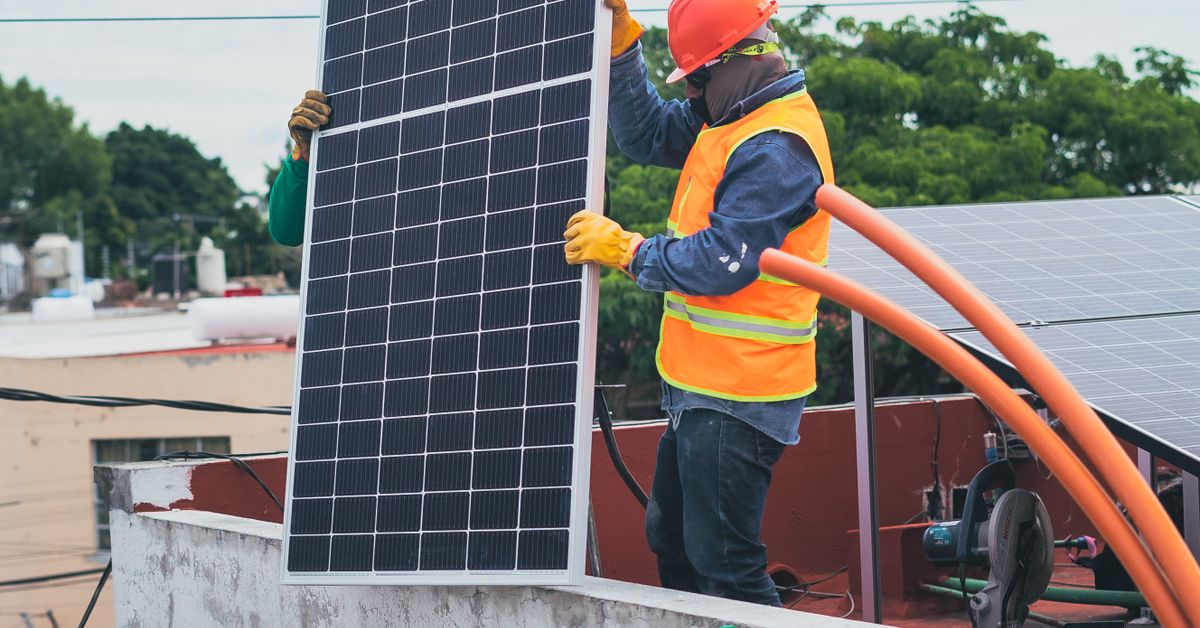
Solar panel installation in India typically costs between Rs 40,000 and Rs 70,000 per kW before subsidy, meaning a standard 3 kW home system runs roughly Rs 1.2 lakh to Rs 2.1 lakh before government support is applied. After the PM Surya Ghar subsidy of up to Rs 78,000, the effective cost for most households drops significantly, often paying itself back within four to six years.
What Determines Solar Panel Installation Cost
Several factors influence the final price of a rooftop solar installation, including panel type and efficiency, inverter quality, mounting structure complexity, and local installer labor rates. Premium monocrystalline or bifacial panels cost more upfront but often deliver better long-term efficiency than standard polycrystalline panels. Additionally, roof type matters significantly, since a flat concrete roof typically requires simpler mounting than a sloped tile or metal roof, which can add to installation labor costs.
Typical Cost by System Size
- 1 kW system: roughly Rs 40,000 to Rs 70,000 before subsidy, suitable for very small households with minimal electricity use.
- 3 kW system: roughly Rs 1.2 lakh to Rs 2.1 lakh before subsidy, the most common size for average Indian households.
- 5 kW system: roughly Rs 2 lakh to Rs 3.5 lakh before subsidy, suited to larger homes or households with higher electricity consumption.
- 10 kW system: roughly Rs 4 lakh to Rs 7 lakh before subsidy, typically used for larger homes, small businesses, or shared residential complexes.
How Government Subsidy Reduces the Cost
Under the PM Surya Ghar Muft Bijli Yojana, the central government provides a subsidy of Rs 30,000 per kW for the first 2 kW, and Rs 18,000 per kW for the next 1 kW, capped at a maximum of Rs 78,000 for systems of 3 kW or larger. Consequently, a 3 kW system that costs Rs 1.2 lakh to Rs 2.1 lakh before subsidy can drop to a net cost of roughly Rs 45,000 to Rs 1.3 lakh after the subsidy is applied. Furthermore, some state governments offer additional subsidies on top of the central scheme, so it is worth checking with your local electricity distribution company before installation.
How Long Does It Take to Recover the Cost?
Most residential solar installations in India pay back their net cost within four to six years through reduced electricity bills, depending on local tariff rates and how much of the generated power is self-consumed versus exported to the grid. Since panels typically carry a 25-year performance warranty, a system that pays for itself in five to six years can continue generating largely free electricity for the following two decades. Therefore, the return on investment for solar remains one of the strongest available for Indian homeowners with a stable roof and adequate sunlight.
Before You Install: Estimate Your Own Savings
Costs vary meaningfully by city, roof type, and installer, so it helps to run your own numbers before committing. Use GreenNewsDesk’s Solar Panel Savings Calculator to estimate your payback period based on your location and electricity usage. You can also read our broader explainer on how solar power works, and check whether an audit through our Home Energy Audit Checklist Tool reveals other savings opportunities first. For more explainers, browse the Green Tech & Innovation category.
Government Subsidies That Reduce Installation Cost
Several central and state subsidies can meaningfully lower the effective cost of solar panel installation in India. The Ministry of New and Renewable Energy (MNRE) administers the PM Surya Ghar Muft Bijli Yojana, which offers subsidies for rooftop solar installations on residential properties, alongside state-specific net metering incentives that let households sell excess power back to the grid. Eligibility and subsidy amounts vary by system size and state, so checking the current MNRE portal before finalising an installer quote can meaningfully change the effective payback period discussed earlier in this guide.
Frequently Asked Questions
How much does a 3 kW solar system cost in India?
A 3 kW system typically costs between Rs 1.2 lakh and Rs 2.1 lakh before subsidy, dropping to roughly Rs 45,000 to Rs 1.3 lakh after the maximum Rs 78,000 central subsidy is applied.
What is the average cost per kW for solar panels in India?
Installation typically costs between Rs 40,000 and Rs 70,000 per kW before subsidy, depending on panel quality, inverter type, and local installer rates.
How much subsidy can I get for solar panels?
Under PM Surya Ghar Muft Bijli Yojana, the maximum central subsidy is Rs 78,000 for systems of 3 kW or larger, with smaller systems receiving proportionally less.
How long does it take for solar panels to pay for themselves?
Most residential systems in India pay back their net installation cost within four to six years through reduced electricity bills, depending on local tariffs.
Does the cost include maintenance?
Base installation quotes usually do not include ongoing maintenance, though solar panels require minimal upkeep beyond occasional cleaning and periodic inverter checks.


2 thoughts on “Solar Panel Installation Cost in India: What to Expect in 2026”
Comments are closed.