Energy storage refers to technology that captures energy produced at one time for use at a later time, most commonly through batteries, but also through thermal, flywheel, and compressed air systems. As India’s solar and wind capacity grows, energy storage has become essential for balancing the grid, since these sources don’t generate power around the clock.
Why Energy Storage Matters for Renewable Power
Solar and wind power are inherently intermittent, meaning generation depends on sunlight and wind conditions rather than matching electricity demand in real time. Consequently, energy storage systems capture surplus electricity generated during peak production periods, such as midday solar output, and release it later when demand is high but generation is low, such as evening hours. Without adequate storage, grids relying heavily on renewables risk instability, since supply and demand must be balanced at every moment.
Battery Energy Storage Systems (BESS)
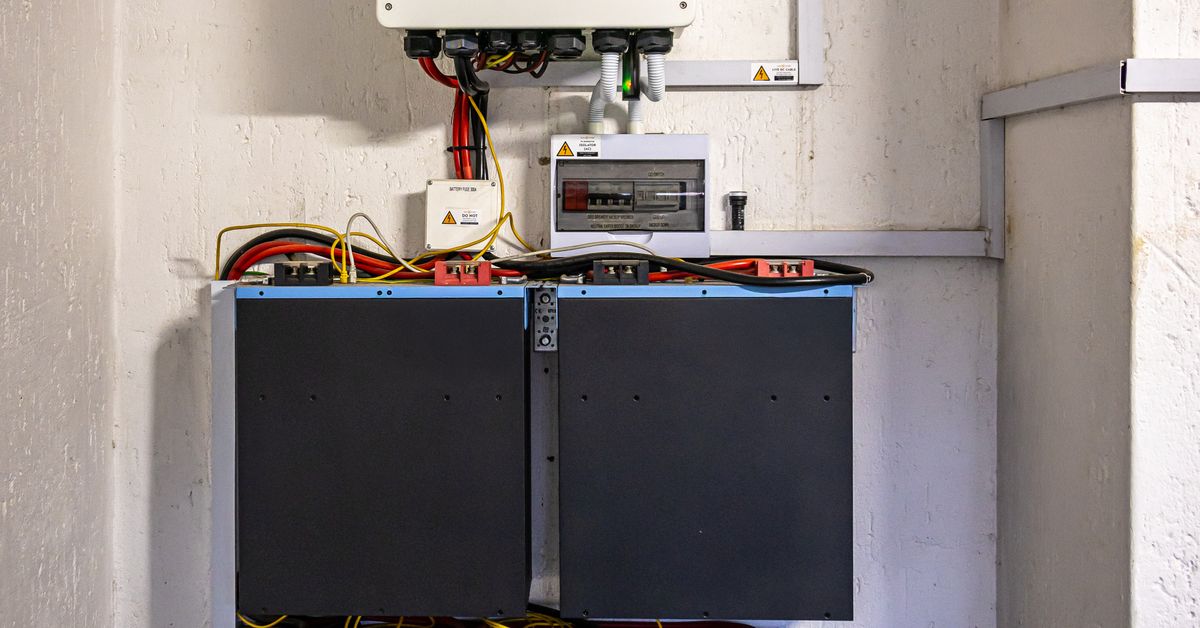
Battery energy storage systems, typically using lithium-ion technology, have become the dominant form of grid-scale energy storage due to falling battery costs and fast response times. BESS installations can range from small home battery backups to massive grid-scale facilities that store hundreds of megawatt-hours of electricity. Major Indian renewable energy companies have increasingly paired large solar and wind projects with battery storage to smooth out generation and provide more reliable power delivery.
Thermal Energy Storage
Thermal energy storage captures heat or cold for later use, commonly through molten salt systems in concentrated solar power plants, or through ice-based cooling systems in commercial buildings. Unlike batteries, thermal storage doesn’t store electricity directly but instead stores the energy needed to produce heating or cooling later, which can be more cost-effective for specific industrial and commercial applications.
Other Types of Energy Storage
- Flywheel energy storage: stores energy as kinetic motion in a rapidly spinning rotor, offering fast response times useful for short-duration grid stabilization.
- Compressed air energy storage: stores energy by compressing air in underground caverns, then releases it to drive turbines when electricity is needed.
- Pumped hydro storage: pumps water uphill during low demand, then releases it through turbines during peak demand, remaining one of the largest-scale storage methods globally.
- Hydrogen storage: uses surplus renewable electricity to produce hydrogen, which can later be converted back to electricity or used directly as fuel.
Energy Storage and India’s Renewable Future
As India’s solar capacity crosses 164 GW and wind capacity exceeds 57,000 MW, energy storage will play an increasingly central role in ensuring this renewable capacity translates into reliable, round-the-clock power. To understand the renewable sources feeding into these storage systems, read our explainers on how solar power works and what wind energy is. For household-level storage, see our solar battery guide. Browse more explainers in the Green Tech & Innovation category.
Challenges Facing Energy Storage Adoption
Despite falling battery costs, large-scale energy storage still faces meaningful adoption barriers in India, including high upfront capital costs for grid-scale battery installations and the need for supportive regulatory frameworks that properly value the grid stability storage provides. Additionally, most Indian electricity markets have not yet fully developed pricing mechanisms that compensate storage operators for the grid balancing services they provide, making the business case for large-scale storage projects less straightforward than for generation assets alone. Furthermore, supply chain dependencies for battery raw materials like lithium and cobalt, most of which are not domestically mined in significant quantities, introduce a degree of import dependency that storage expansion must navigate as it scales.
India’s Energy Storage Targets and Policy Support
Recognizing storage’s critical role in supporting renewable energy expansion, the Indian government has introduced viability gap funding schemes specifically for battery energy storage projects, aiming to make large-scale storage more financially attractive to developers. Several state electricity regulatory commissions have also begun mandating minimum storage capacity as part of new renewable energy project tenders, ensuring new solar and wind capacity comes bundled with adequate storage from the outset. Consequently, India’s cumulative battery storage capacity is expected to grow substantially over the coming years as these policy mechanisms mature alongside continued declines in battery technology costs.
Frequently Asked Questions
What is energy storage in simple terms?
Energy storage refers to technology that captures energy produced at one time for use later, most commonly through batteries, but also thermal, flywheel, and other systems.
Why is energy storage important for renewable energy?
Solar and wind generation is intermittent, so storage captures surplus electricity during peak production and releases it when demand is high but generation is low.
What is the most common type of energy storage?
Battery energy storage systems (BESS), typically using lithium-ion technology, are the most common form of grid-scale energy storage due to falling costs and fast response.
What is pumped hydro storage?
Pumped hydro storage pumps water uphill during low demand, then releases it through turbines during peak demand, remaining one of the largest-scale storage methods globally.
Can hydrogen be used for energy storage?
Yes, surplus renewable electricity can be used to produce hydrogen, which can later be converted back to electricity or used directly as fuel.
Sources and further reading: Ministry of New and Renewable Energy | International Energy Agency